

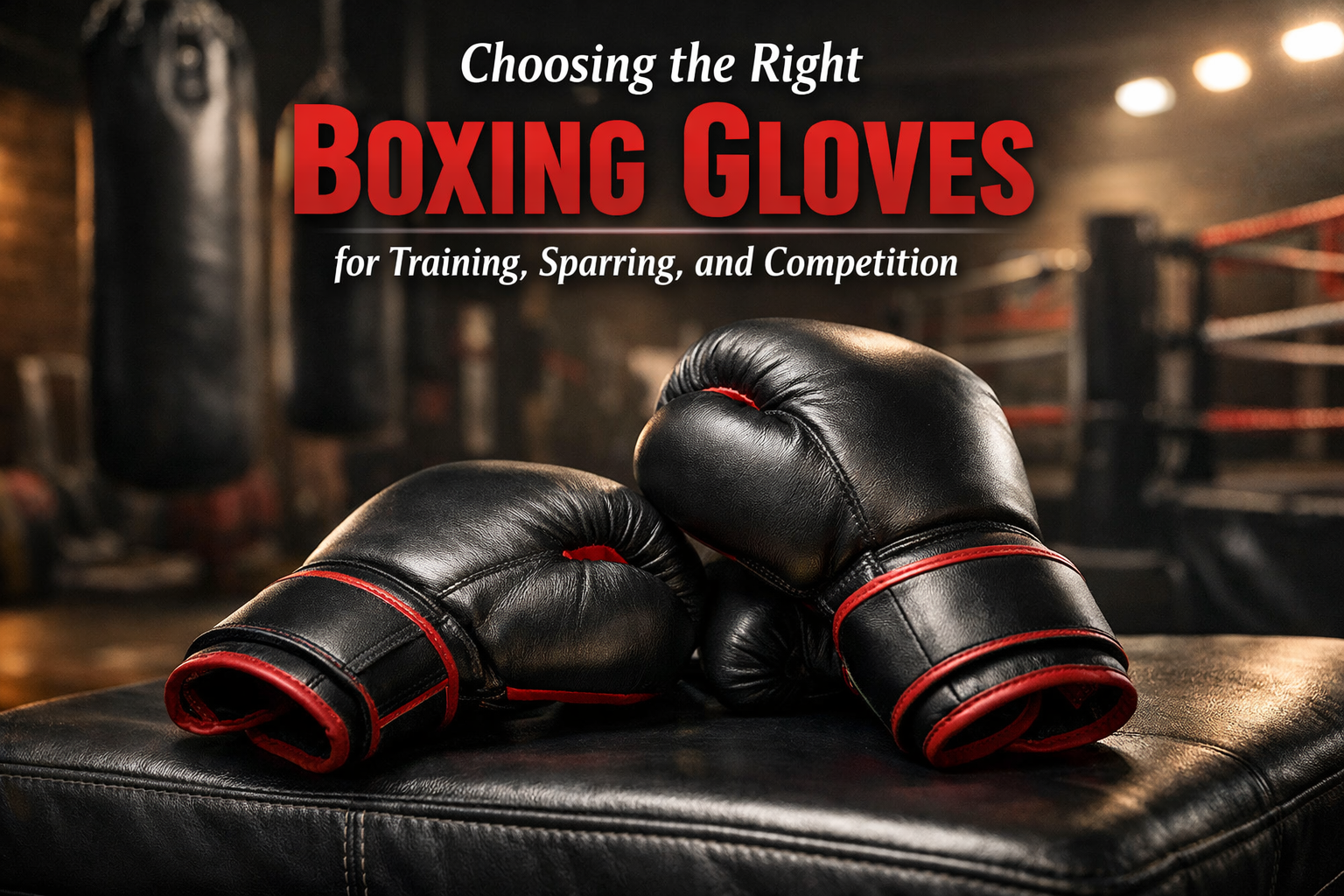
Learn how to choose the right boxing gloves for training and sparring. Discover glove weights, materials, wrist support types, and sizing tips.
Selecting the right boxing gloves is one of the most important decisions a fighter can make. While gloves may look similar at first glance, each type is designed with a specific purpose in mind. Choosing incorrectly can lead to reduced performance, faster equipment breakdown, and even preventable injuries.
Whether you are new to boxing or refining your training routine, understanding the differences between training gloves, sparring gloves, and competition gloves will help you make an informed decision that protects your hands and improves your overall performance.
If you are unsure about glove sizing before purchasing, refer to our detailed Size Chart page for guidance.
Why Boxing Glove Selection Matters
Your hands contain small bones, joints, and ligaments that absorb repeated impact during training. Proper gloves distribute force evenly, stabilize the wrist, and protect your knuckles.
Using gloves that are too light, poorly padded, or lacking wrist support increases the likelihood of:
Wrist strain
Knuckle soreness
Hand fatigue
Long-term joint discomfort
A quality glove does more than cushion impact. It supports consistent training and long-term durability.
Understanding the Three Main Types of Boxing Gloves
Although many gloves appear similar, they are built differently based on intended use. The three primary categories are training gloves, sparring gloves, and competition gloves.
Training Gloves
Training gloves are the most versatile and commonly used option. They are suitable for heavy bag workouts, pad work, and general conditioning sessions.
Most athletes select training gloves between 12oz and 16oz depending on body weight and training intensity.
A well-constructed training glove should provide:
Balanced, multi-layer padding
Secure wrist support
Durable outer materials
Comfortable interior lining
Because these gloves endure repeated impact on bags and pads, durability is essential. High-quality leather construction typically offers greater longevity compared to lower-grade materials.
For consistent gym training, explore our Training Gloves collection designed for durability and structured impact absorption.
Sparring Gloves
Sparring gloves are specifically engineered to prioritize safety for both fighters. Since sparring involves striking another person, these gloves typically feature softer padding and heavier weight.
Many gyms require 16oz gloves for sparring regardless of experience level. The added weight increases cushioning and reduces impact force.
Using dedicated sparring gloves:
Minimizes injury risk
Protects training partners
Extends glove lifespan
Improves long-term performance
It is strongly recommended not to use your heavy bag gloves for sparring. Bag work compresses padding over time, reducing its ability to protect your partner.
If you spar regularly, consider selecting a pair from our Sparring Gloves collection designed for consistent protection and wrist stability.
Competition Gloves
Competition gloves are designed exclusively for sanctioned bouts. They are lighter, more compact, and regulated according to athletic commission standards.
Unlike training gloves, competition gloves focus on speed and precision rather than prolonged protection.
Because of their design:
They should not be used for daily training
They wear down quickly if misused
They offer less protective padding compared to sparring gloves
Competition gloves are meant for performance under regulated conditions, not repeated gym sessions.
Choosing the Correct Glove Weight
Boxing gloves are measured in ounces (oz), which reflects the weight and amount of padding inside the glove.
Here is a general guideline:
8oz–10oz for light training and pad work
12oz–14oz for general training
14oz–16oz for sparring
16oz–18oz+ for heavier athletes or added protection
If you are unsure about sizing, always consult a detailed size chart before purchasing.
Wearing the correct glove weight ensures proper impact absorption and reduces strain during repetitive workouts.
Lace-Up vs Hook-and-Loop Closures
Another important factor is wrist closure type.
Lace-Up Gloves offer:
Maximum wrist stability
Tighter, more customized fit
Preferred use for sparring and advanced training
Hook-and-Loop (Velcro) Gloves offer:
Quick on-and-off convenience
Ideal for solo training
Practical for daily gym sessions
Your choice depends on training environment and support preference.
Leather vs Synthetic Construction
Material selection influences both durability and comfort.
Leather Gloves typically provide:
Longer lifespan
Better structural integrity
Improved comfort over time
Synthetic Gloves often provide:
Lower cost
Lightweight feel
Suitable entry-level option
For athletes training multiple times per week, investing in durable materials helps reduce long-term replacement costs.
The Importance of Fit and Wrist Support
Fit is just as critical as weight.
A properly fitted glove should:
Feel snug without restricting circulation
Allow room for hand wraps
Stabilize the wrist in a neutral position
Prevent excessive internal hand movement
Poor wrist alignment is one of the most common causes of boxing-related injuries, especially among beginners.
When to Replace Your Boxing Gloves
Even high-quality gloves eventually wear down. You may need replacement if:
Padding feels compressed
Wrist support weakens
Interior lining tears
Persistent odor develops
Consistent athletes often replace gloves every 6 to 18 months depending on usage frequency.
Proper care and storage extend glove lifespan. If you are unsure about maintenance, read our guide on How to Care for Your Boxing Gloves.
Why Owning Multiple Gloves Is a Smart Investment
Many beginners attempt to use one pair of gloves for everything. While this may seem practical, it leads to:
Faster padding breakdown
Reduced sparring protection
Shortened glove lifespan
Owning separate gloves for bag work and sparring protects both your equipment and your training partners.
Over time, this approach becomes both safer and more cost-effective.
Professional Conclusion
Choosing the right boxing gloves is not just about appearance or price. It is about selecting equipment that supports your training goals, protects your hands, and ensures long-term durability.
Understanding the difference between training, sparring, and competition gloves allows you to train smarter and reduce injury risk. Proper glove weight, structured padding, secure wrist support, and quality materials all contribute to better performance and safety.
Investing in the correct gloves today leads to stronger, safer, and more consistent training tomorrow.
Call to Action
If you are ready to upgrade your boxing equipment, explore our collection of high-quality boxing gloves designed for serious training and sparring.
Browse Training Gloves
View Sparring Gloves
Check the Size Chart
For personalized assistance, contact our support team at fiestgloves@gmail.com and we will help you choose the right glove for your training needs.
Train with confidence. Perform with consistency.


