

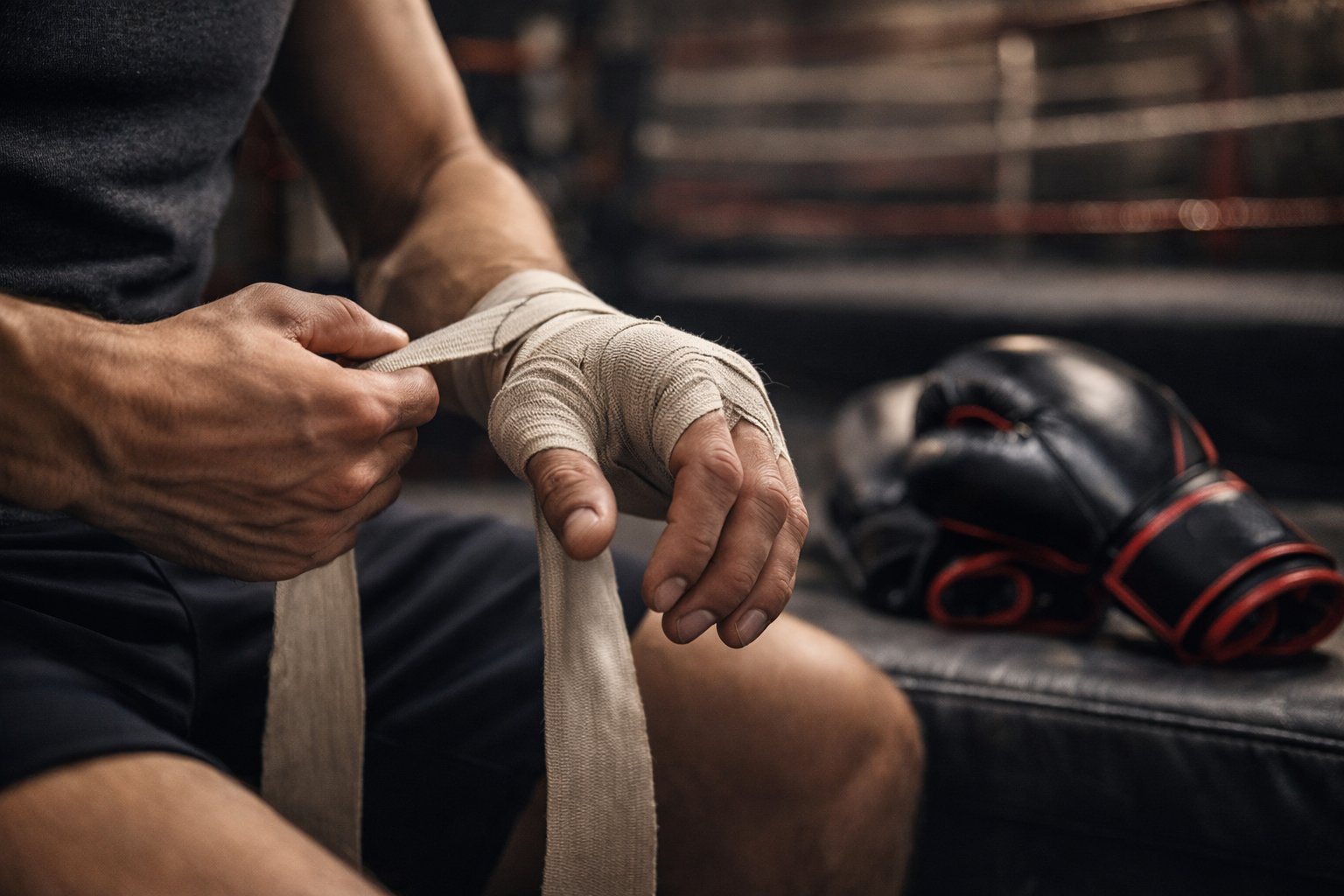
When you throw a punch, force travels through your knuckles into your wrist and forearm. If your wrist bends upon impact, even slightly, it increases the risk of sprains and joint damage. Hand wraps help stabilize the wrist in a neutral position while also reinforcing the knuckle area.
In addition to protection, wraps absorb sweat. This helps extend the lifespan of your gloves by preventing moisture buildup inside the lining.
Skipping hand wraps may seem convenient, but over time it significantly increases the risk of injury.
Choosing the Right Hand Wraps
Standard boxing hand wraps are typically 180 inches long for adults. This length provides enough material to secure the wrist, knuckles, and thumb properly. Shorter wraps may not offer adequate support, especially during heavy bag training or sparring sessions.
Wraps are usually made from cotton or a cotton-blend material with slight elasticity. The material should feel supportive but not overly tight.
Once you have the proper wraps, you are ready to begin the wrapping process.
Step-by-Step Guide to Wrapping Your Hands
Start by placing the loop at the end of the wrap around your thumb. The wrap should extend across the back of your hand toward your wrist.
Begin wrapping around your wrist three to four times. This creates a solid base of support. The wrist is one of the most vulnerable areas in boxing, so proper stabilization here is critical.
Next, bring the wrap diagonally across the back of your hand toward your knuckles. Wrap around your knuckles three to four times, ensuring the material lies flat without bunching. This padding will cushion impact when you strike.
After securing the knuckles, bring the wrap back down to the wrist once to reinforce stability. From there, begin weaving the wrap between your fingers. Start between the pinky and ring finger, pulling the wrap through and across the back of your hand toward the wrist. Repeat this process between each finger, returning to the wrist each time. This technique separates the knuckles and adds structural integrity to your fist.
Once you have wrapped between all fingers, circle the knuckles again to secure everything in place. Finish by wrapping the wrist several more times until you reach the end of the wrap. Fasten the Velcro securely.
Your hand should feel snug and supported, but not tight enough to restrict circulation. You should be able to open and close your fist comfortably.
Common Hand Wrapping Mistakes
One of the most common mistakes beginners make is wrapping too loosely. A loose wrap shifts during training and fails to provide proper protection.
On the other hand, wrapping too tightly can cut off circulation and cause numbness in the fingers. If your hand tingles or changes color, the wrap is too tight.
Another mistake is skipping the wrist reinforcement phase. Many injuries occur because the wrist lacks proper stabilization. Always ensure you create a firm base around the wrist before moving to the knuckles.
Finally, avoid folding or bunching the wrap material. Wrinkles inside the glove can cause discomfort during long training sessions.
How to Know If Your Wrap Is Correct
A properly wrapped hand should feel secure and supported. When you make a fist, the wrap should hold your knuckles together without causing pressure points.
The wrist should feel stabilized but still allow natural movement. If your hand feels stiff or uncomfortable before putting on gloves, adjust and rewrap.
After placing your gloves on, you should feel evenly distributed padding across your knuckles and solid wrist alignment.
How Often Should You Wash Hand Wraps?
Because hand wraps absorb sweat, they should be washed regularly. Ideally, wraps should be washed after every training session.
Unwashed wraps can develop odor and transfer bacteria into your gloves. Clean wraps not only improve hygiene but also help preserve the interior lining of your gloves.
Allow wraps to dry completely before reusing them to prevent moisture buildup.
The Relationship Between Hand Wraps and Gloves
Even the highest-quality boxing gloves cannot replace proper hand wrapping. Wraps provide internal structure and compression that gloves alone cannot achieve.
When paired with properly fitted training or sparring gloves, wraps maximize protection and comfort. If you are unsure about glove sizing, refer to a detailed size chart before selecting your gloves.
Combining correct wraps with durable gloves creates a safer and more efficient training experience.
Conclusion
Learning how to wrap your hands properly is one of the first responsibilities every boxer should master. It is a simple step that significantly reduces injury risk and improves long-term performance.
Hand wraps protect your knuckles, stabilize your wrists, and extend the lifespan of your gloves. Taking a few extra minutes before each session ensures safer training and greater confidence during workouts.
Proper technique, consistent wrapping, and well-fitted gloves work together to support stronger, more reliable performance.
Call to Action
If you are preparing for training, make sure your equipment supports proper protection. Explore our collection of high-quality boxing gloves designed for durability, wrist stability, and consistent performance.
For questions about glove sizing or training gear, contact our support team at fiestgloves@gmail.com. We are here to help you choose equipment that matches your training needs.
Train safely. Protect your hands. Build consistency.


